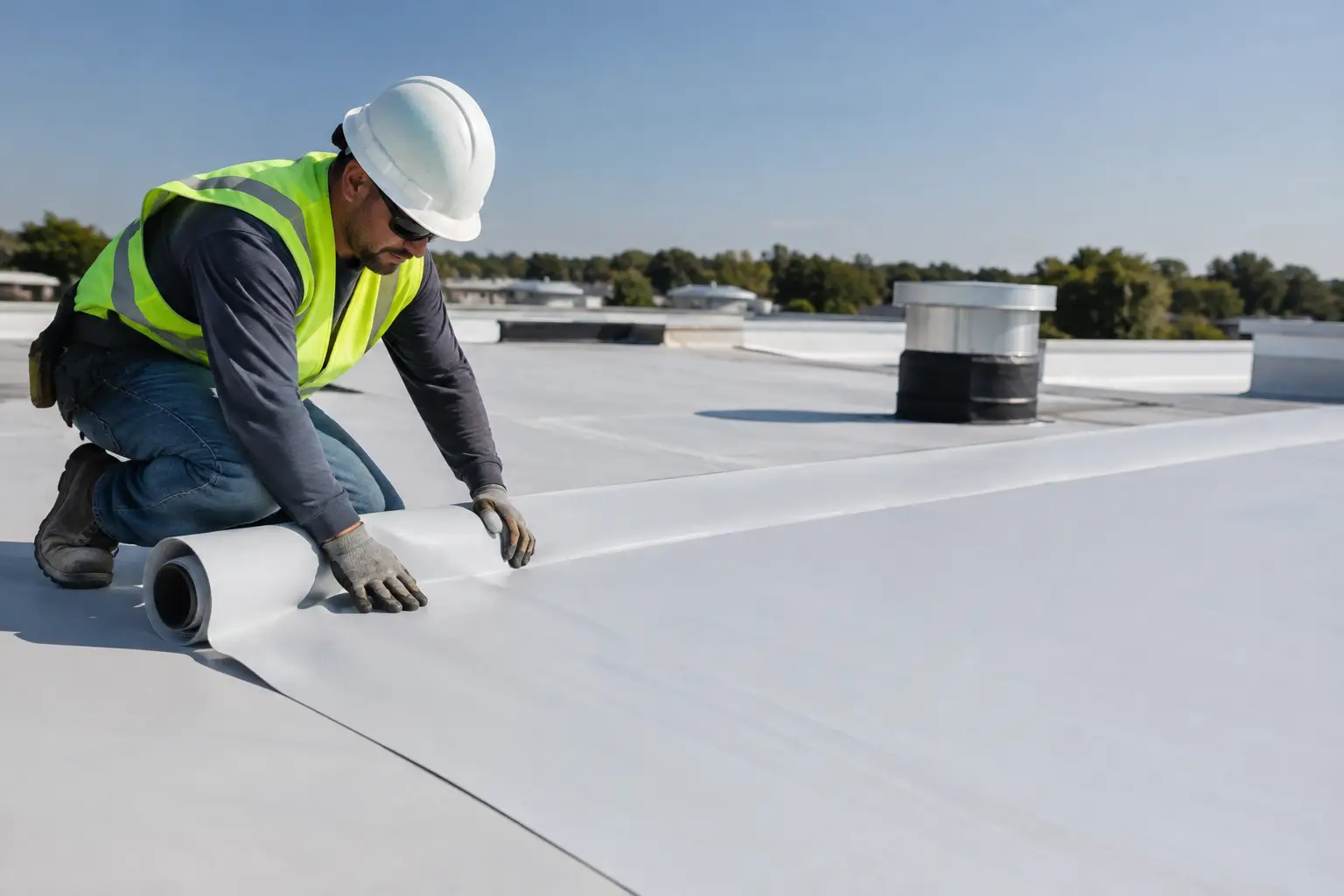
TPO Roofing Systems for Low-Slope Roofs

A flat or low-slope roof may look simple from the ground, but it has no room for shortcuts. Water moves slowly across its surface, flashing details carry a heavy workload, and a small seam failure can turn into a costly interior leak. TPO roofing systems are a practical choice for many commercial buildings and low-slope residential sections because they create a continuous, heat-reflective waterproof surface when installed correctly.
For property owners, the question is not just whether TPO is a good material. It is whether the roof deck, drainage, insulation, penetrations, and installation method are right for the building. A quality roof starts with that honest assessment.
What Is a TPO Roof?
TPO stands for thermoplastic polyolefin. It is a single-ply roofing membrane commonly installed on commercial buildings, additions, garages, apartment buildings, and homes with low-slope roof areas. The membrane is usually white, though other colors are available, and it is designed to resist ultraviolet exposure, weathering, and ponding water better than many older flat-roof materials.
Unlike a shingle roof, a TPO roof is not made from overlapping individual pieces. Large membrane sheets cover the roof surface, while seams are joined with hot-air welding. When the seams are properly welded, they become a strong part of the system rather than a weak line held together only with adhesive.
That seam performance is one reason TPO is widely used. Still, material alone does not stop leaks. Pipe boots, wall transitions, rooftop equipment curbs, drains, and edge metal all need careful detailing. The roof is only as dependable as the work around its most vulnerable areas.
Why TPO Roofing Systems Work Well in Northern California
Northern California properties can see intense sun, warm summers, seasonal rain, wind, and debris from nearby trees. A white TPO membrane reflects a meaningful amount of solar heat, which can help reduce heat absorbed by the roof assembly. For a commercial building with a large exposed roof area, that benefit may support more comfortable interior conditions and reduce strain on cooling equipment.
TPO also provides a clean, uniform finish that works well on roofs where appearance still matters. For business owners, a maintained white membrane can make a property look cared for from surrounding higher ground. For homeowners, it can be a smart solution on a low-slope porch, addition, or detached structure where shingles are not the right fit.
Its value depends on the application. A steep residential roof usually calls for architectural shingles or metal roofing, not a membrane system. But for a roof with limited pitch, TPO can be one of the most practical options available.
Heat-Welded Seams Matter
TPO seams are heat-welded using specialized equipment. The installer applies controlled hot air between overlapping sheets, then uses pressure to form the bond. A trained crew checks the welds as work progresses, because temperature, speed, membrane condition, and weather can affect the final result.
This is not a place for guesswork. Under-welded seams can separate, while overheated membrane can be damaged. Proper installation includes testing seams and addressing any questionable areas before the crew leaves the job.
Reflectivity Is Helpful, Not a Cure-All
A reflective membrane can reduce surface temperature, but it will not solve poor insulation, inadequate ventilation below the roof, or an oversized cooling load. It also needs to stay reasonably clean to perform at its best. Dirt, standing water, and leaf buildup can affect appearance and drainage over time.
Property owners should view reflectivity as one part of a well-built roof assembly, not a promise of a specific energy bill reduction.
Choosing the Right TPO Roof Assembly
A dependable TPO installation begins below the membrane. If the roof deck has moisture damage, deteriorated wood, loose fasteners, or uneven areas, those issues should be corrected before new roofing goes down. Covering a failed substrate may save money at the start, but it often leads to premature trouble.
Insulation is another important decision. Polyisocyanurate insulation boards are commonly used beneath TPO membrane to improve thermal performance. On roofs with drainage concerns, tapered insulation may be used to direct water toward drains, scuppers, or gutters. This can be especially useful where the existing roof has low spots that allow water to sit long after a storm.
The membrane itself is available in different thicknesses. Thicker material can offer more durability in high-traffic or demanding conditions, but it also raises project cost. A building with regular HVAC service traffic may benefit from thicker membrane and designated walkway pads. A simple low-slope residential section may not need the same specification.
Fully Adhered or Mechanically Attached?
Most TPO roofs are installed as either fully adhered or mechanically attached systems. A fully adhered system uses bonding adhesive to secure the membrane across the roof surface. It can provide a smooth look and may be a good fit where wind performance and appearance are priorities.
A mechanically attached system uses fasteners and plates, typically placed along membrane seams before the next sheet is welded over them. It can be an efficient option on suitable commercial roofs. The best method depends on the deck type, building height, local wind requirements, insulation layout, budget, and manufacturer specifications.
The right answer is not always the lowest initial price. A clear estimate should explain what system is being installed, what is being removed, how drainage will be handled, and how flashing details will be finished.
Common Problems on TPO Roofs
Even a high-quality membrane needs attention. The most common issues tend to appear at details rather than in the open field of the roof. Flashing around penetrations can loosen, edge metal can be damaged by wind, and drains can clog with leaves or roofing debris. A puncture from dropped tools, service work, or foot traffic can also create a direct path for water.
Ponding water deserves a closer look. TPO is designed to handle wet conditions, but water that remains on the roof for extended periods may point to a drainage issue. It also collects dirt and debris, adds unnecessary weight, and makes small problems harder to spot. The solution may be cleaning the drainage path, repairing a low area, or improving slope with tapered insulation during replacement.
Leaks do not always show up directly below the damaged area. Water can travel along decking, insulation, or structural components before staining a ceiling. That is why a professional inspection should trace the source instead of simply applying sealant where the stain appears indoors.
Maintenance Protects the Investment
TPO is low-maintenance, not no-maintenance. A regular roof inspection is one of the most cost-effective ways to catch a loose flashing edge or blocked drain before it causes interior damage. For many properties, inspections before the rainy season and after severe weather are a sensible starting point.
During an inspection, a roofing professional should look at membrane seams, penetrations, roof edges, drains, scuppers, flashing, rooftop equipment, and signs of punctures or trapped moisture. Building owners can help by keeping unauthorized foot traffic off the roof and promptly reporting stains, drips, or bubbling membrane.
Avoid using harsh chemicals or aggressive cleaning methods without checking whether they are compatible with the membrane. When work crews need access to rooftop units, walkway pads can help protect high-traffic paths.
When Replacement Makes More Sense Than Repair
Localized TPO repairs can be effective when the membrane is otherwise in good condition and the damage is limited. A small puncture, isolated flashing failure, or seam issue can often be repaired with compatible materials and proper heat welding.
Replacement may be the wiser investment when leaks keep returning, the membrane has widespread deterioration, insulation is wet, or drainage problems affect large areas. Installing patches over a roof that has reached the end of its useful life can delay the larger decision, but it rarely removes the underlying risk.
At Hurtado's Roofing, the goal is to give property owners a clear recommendation based on what the roof actually needs. That means looking beyond the visible leak, explaining the condition of the system, and completing the work with details that hold up every SHINGLE time.
A TPO roof should give you confidence when the rain starts, not another reason to watch the ceiling. If your low-slope roof is aging, collecting water, or showing signs of a leak, a thorough inspection can provide a practical path forward before minor damage becomes a larger repair.


Comments